
Introduction to Flute/Bansuri
The Bansuri (Indian classical flute) is one of the world's oldest and most elegant musical instruments. Derived from the words bans (bamboo) and sur (musical note), it is a deceptively simple instrument—just a single piece of hollow bamboo with six or seven finger holes. Yet, in the hands of a master, it is capable of mimicking the microtones (shrutis) and emotional depth of the human voice.
Origins: How and When it Was Found
The Bansuri's origins are deeply rooted in ancient history, mythology, and nature itself.
The Natural Discovery
Long before humans crafted instruments, the concept of the flute existed in nature. Wind passing through hollow bamboo reeds damaged by insects or birds created natural whistling sounds. Ancient pastoral communities (shepherds and herders) noticed this and began cutting bamboo to recreate these relaxing melodies.
Vedic and Mythological Roots
The instrument carries immense spiritual and cultural weight in India:
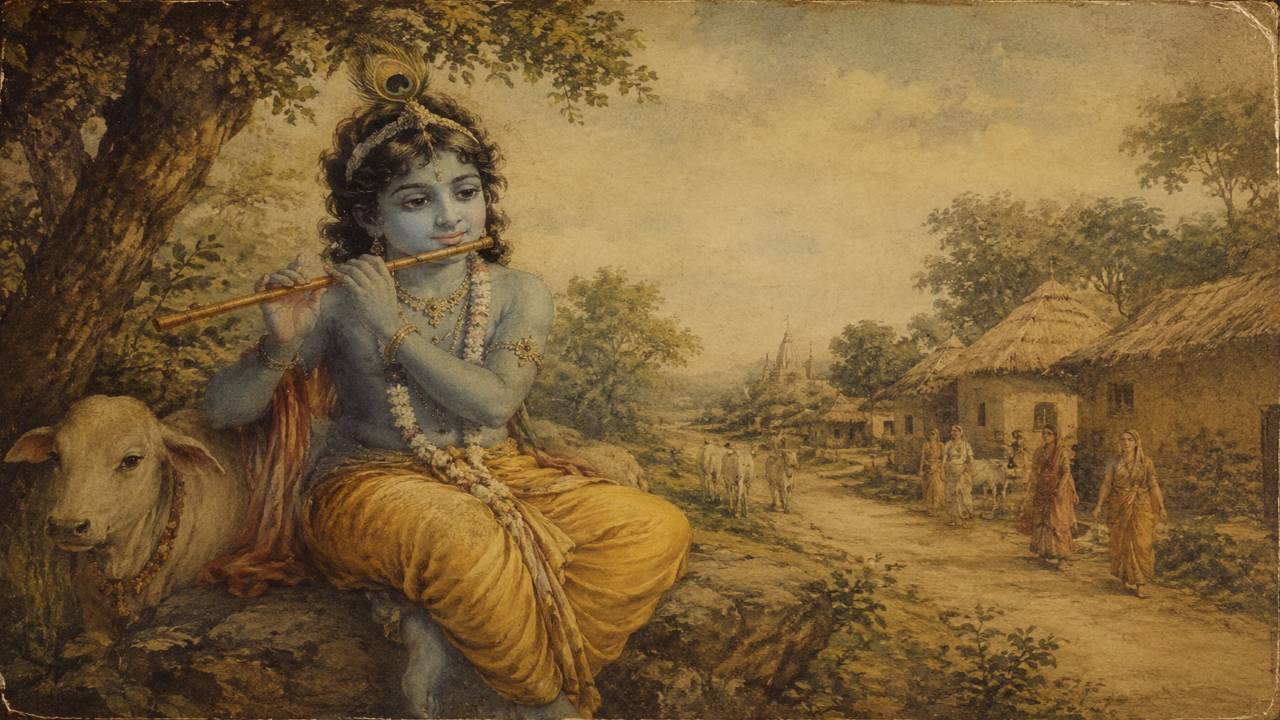
- The Divine Connection: In Hindu mythology, the bansuri is the divine instrument of Lord Krishna. His flute playing was said to be so mesmerizing that it enchanted animals, calmed flowing rivers, and captivated the gopis (cowherd maidens) of Vrindavan.
- Ancient Texts: The flute is explicitly mentioned in the Vedas (texts dating back over 3,000 years) under names like Nadi or Tunava. It is also heavily detailed in Bharata Muni’s Natya Shastra (around 200 BCE–200 CE), the foundational treatise on Indian performing arts.
Who Started the Classical Legacy?
For centuries, the bansuri was primarily viewed as a folk instrument, used by shepherds or accompanying light dance and devotional music. It was considered too simple to handle the rigorous demands of Hindustani (North Indian) Classical Music, which requires complex glides (meend) and a deep bass range.
That narrative changed completely in the 20th century due to a few legendary pioneers:
Pandit Pannalal Ghosh (The Father of Classical Bansuri)
In the 1930s and 40s, Pannalal Ghosh revolutionized the instrument. He experimented with bamboo sizes and introduced a massive, 32-inch bass flute. He also added a seventh finger hole to extend the instrument's range, allowing artists to play the lower notes required for classical Ragas. He proved to the world that the folk flute could hold its own alongside heavy classical instruments like the Sitar or Sarod.
Pandit Hariprasad Chaurasia
If Pannalal Ghosh brought the bansuri to the classical stage, Pt. Hariprasad Chaurasia took it to the global arena. His breathtaking breath control, technical mastery, and soulful improvisations popularized the instrument worldwide, establishing a massive global legacy.
In South India (Carnatic Music)
The key transition was led by pioneers like Sarabha Sastri and later T.R. Mahalingam (Flute Mali), who popularized the smaller, 8-holed South Indian cross-flute (often called the Pullanguzhal or Carnatic flute).
The Flute in Indian Classical Music Structure
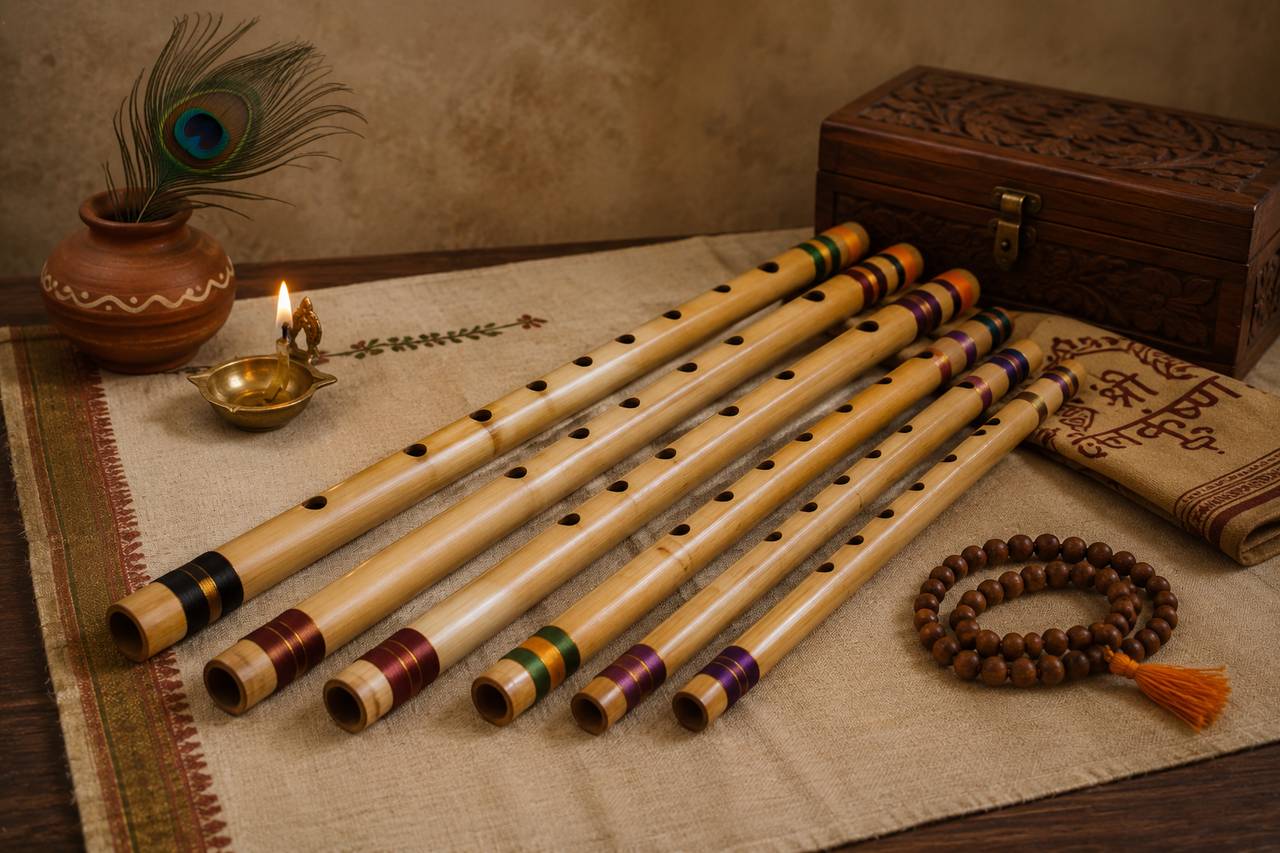
The Indian classical flute differs drastically from the Western metal concert flute. It has no mechanical keys or pads; everything is controlled by direct contact between human flesh and organic bamboo.
Two Distinct Traditions
India features two major classical structures, and the flute adapts beautifully to both:
| Feature | Hindustani Bansuri (North India) | Carnatic Flute (South India) |
|---|---|---|
| Physical Build | Longer (usually 20 to 32 inches), wider bore. | Shorter (usually 12 to 15 inches), thinner bore. |
| Finger Holes | Traditionally 6 holes (or 7, introduced by Pt. Pannalal Ghosh). | Traditionally 8 holes. |
| Playing Style | Emphasizes long, deep, sweeping notes and slow Raga development (Alaap). | Emphasizes fast, intricate rhythmic patterns and continuous ornamentation (Gamaka). |
Why Play the Flute? (Benefits & Uses)
Playing the bansuri is widely regarded as a form of active meditation rather than just a hobby.
1. Mindful Breath & Air Stream Pacing
Sustaining steady notes on the bansuri develops conscious awareness of breath pacing, smooth exhalation, and relaxed posture. Many learners find that focusing on steady airflow creates an unhurried, focused mental state during daily practice.
2. Musical Focus & Everyday Relaxation
The warm acoustic resonance of seasoned bamboo offers an immersive, grounding auditory experience. Focusing entirely on sound purity, finger placement, and swara intonation encourages attentive mindfulness after a demanding day.
3. Deep Emotional Expression
Unlike keyed instruments where pressing a button yields a fixed pitch, the bansuri relies on partial hole covering (half-holes, microtonal finger sliding). This allows the player to seamlessly glide between notes, capturing subtle inflections that express genuine musical feeling.
4. Portability and Simplicity
It requires no electricity, tuning keys, or heavy cases. You can carry a concert-quality instrument anywhere in a simple protective case, connecting with music wherever you go.
The Spirit of the Bansuri
"In classical thought, the bansuri represents the human body. Just as the hollow bamboo must be completely empty inside for the wind to create beautiful music, a musician must empty themselves of ego to let the true beauty of the music flow through them."
About the Author
Written and practice-tested by Aplut, a self-taught bansuri learner practising since 2022. Content is built on direct practice experience and careful research into classical traditions. Because musical lineages and fingering conventions vary, suggestions and corrections are always welcomed via our contact page or at aplut0006@gmail.com. First-hand instrument experience is identified clearly whenever gear is reviewed.